
BOOST4BIOEAST in Zadar: From Project Results to Long-Term Impact
On 20–21 April 2026, ahead of the BIOEAST Bioeconomy Conference in Zadar, partners of the BOOST4BIOEAST project met to review progress and align on the final phase of the project. The meeting marked a clear shift — from implementation towards ensuring long-term impact across the BIOEAST region.
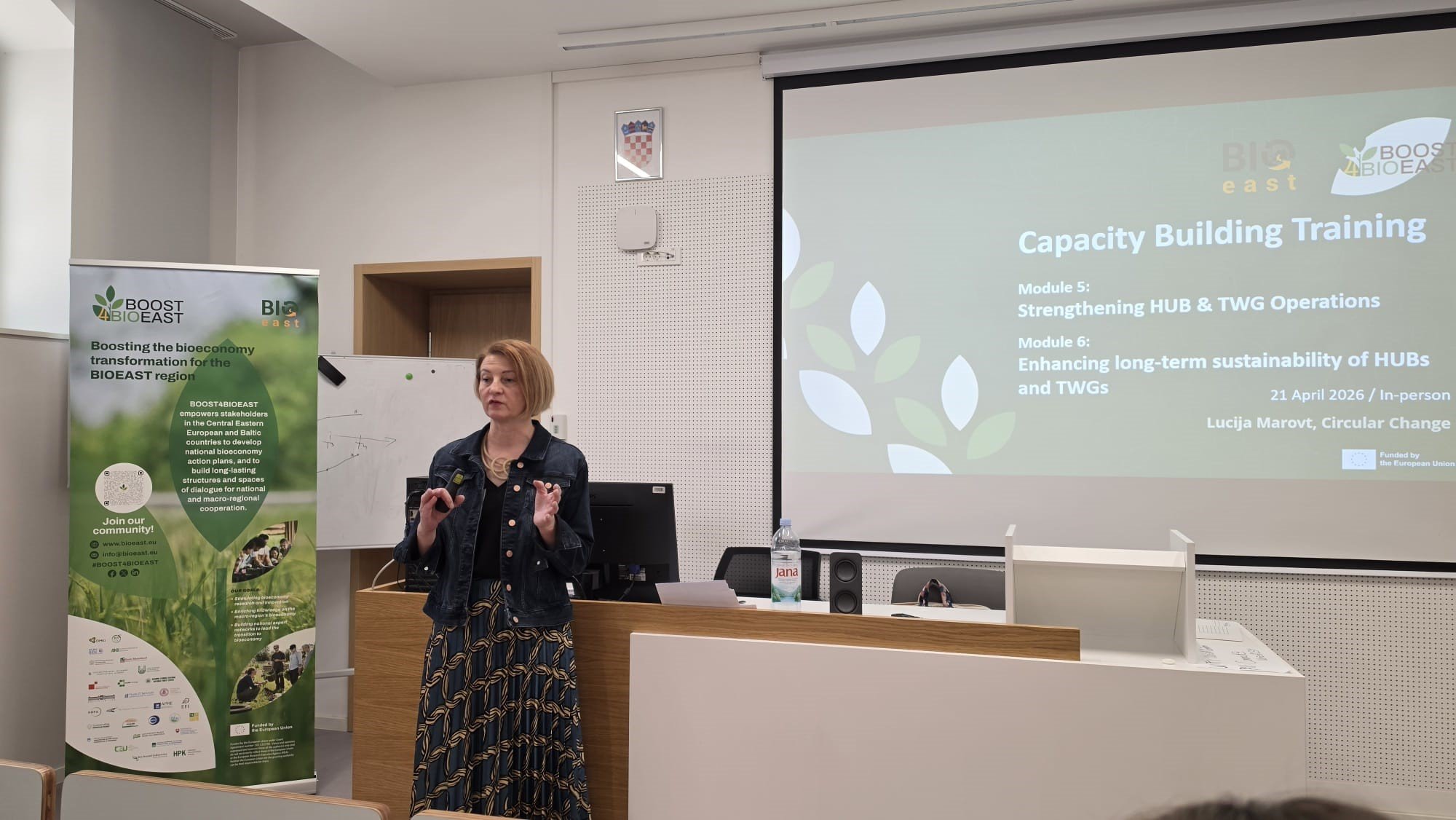
Important part of the programme was the Capacity Building module, organised and facilitated by Lucija Marovt (Circular Change). Bringing together HUB coordinators and Thematic Working Groups, the session combined Modules 5 and 6 and guided participants from assessing their current position (“Where are we now?”) to defining future pathways (“Where and how do we go next?”).
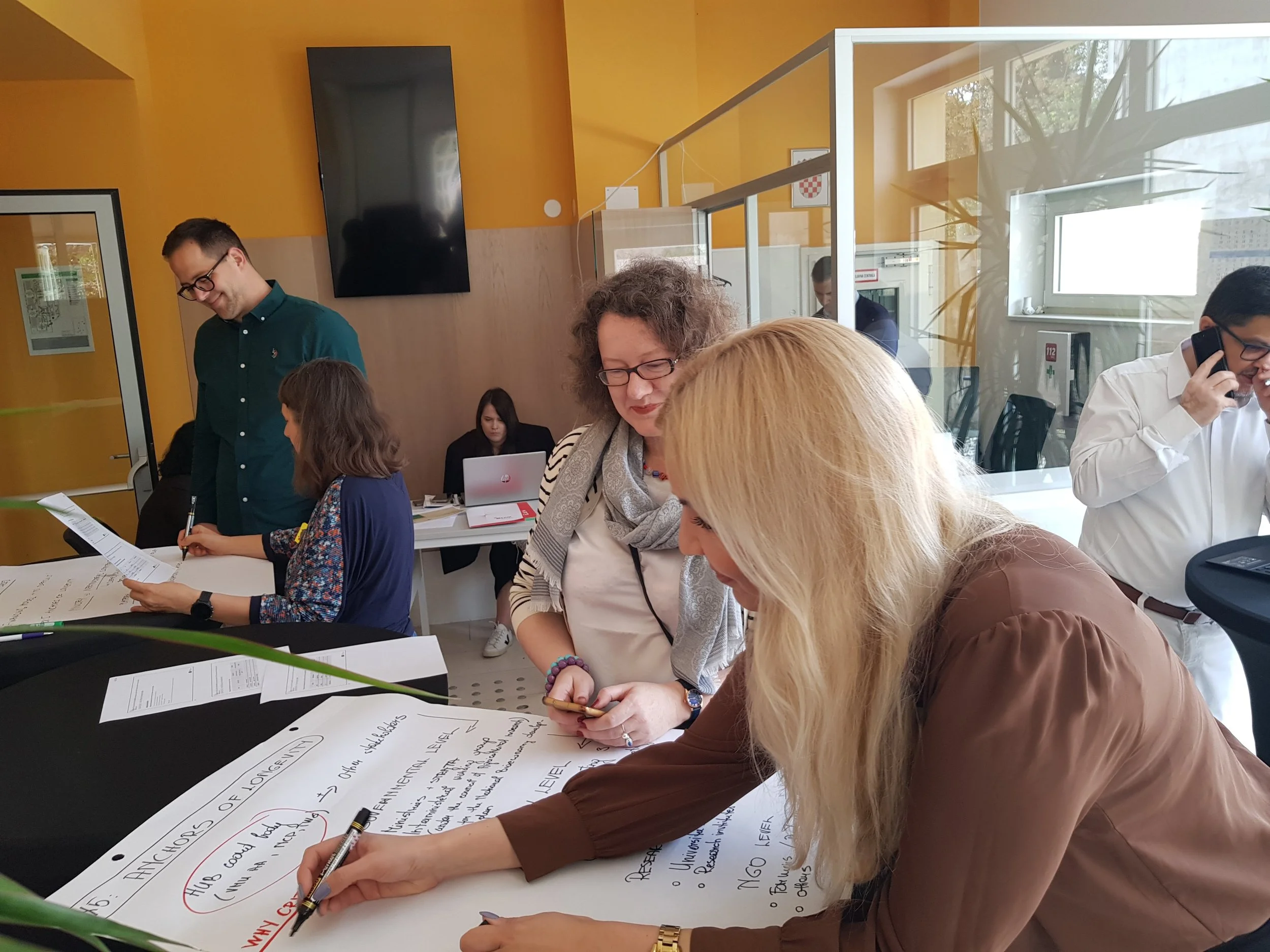
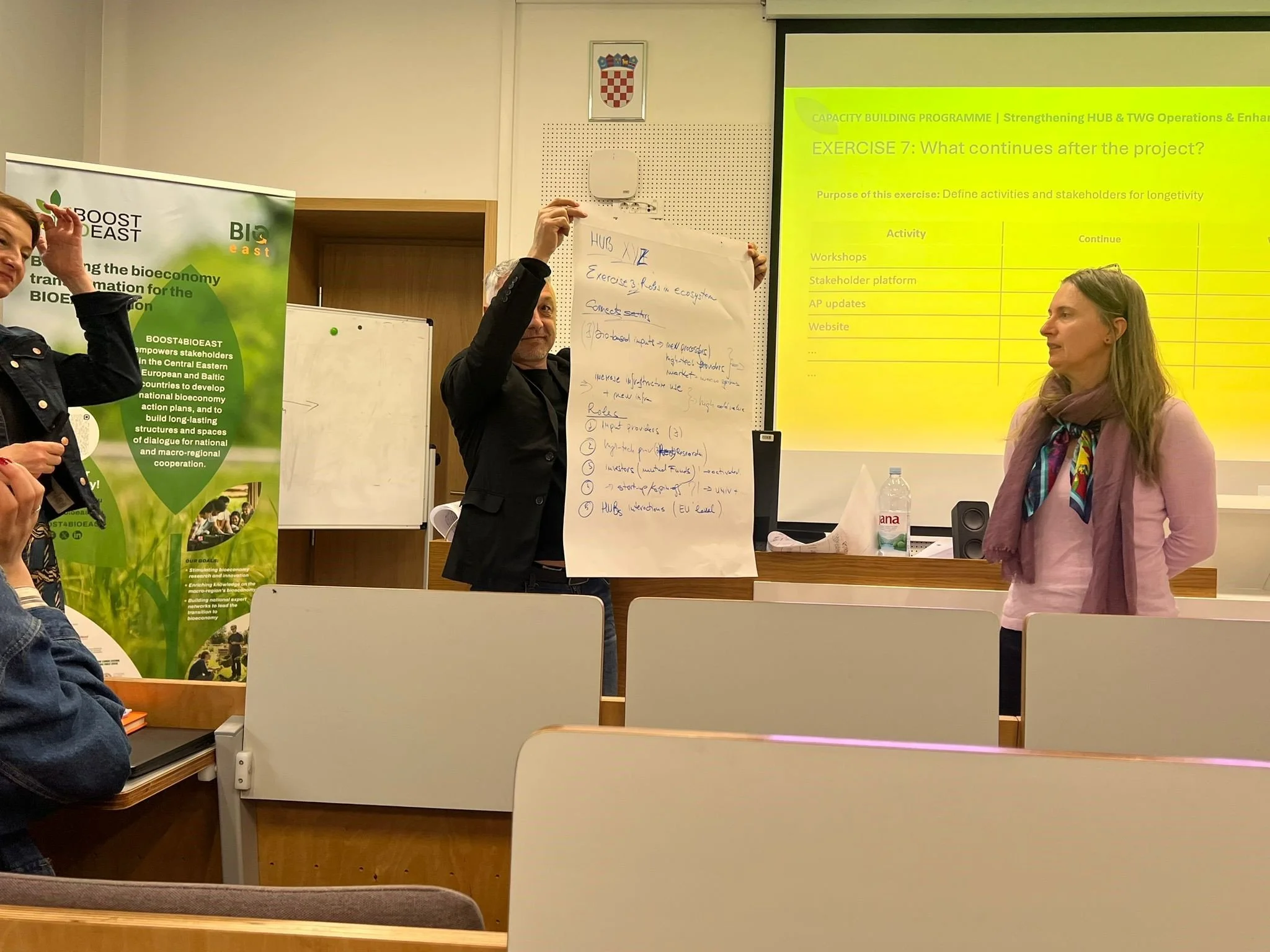
Through practical group work, participants explored HUB maturity, impact reflection, continuity beyond the project, key anchors of longevity, and possible financing models. The session concluded with HUB presentations and a peer exchange, highlighting the value of hands-on tools and cross-country learning.
The partner meeting continued with a BIOEAST Policy Platform discussion, focusing on strategic coordination, governance structures and the long-term value proposition of the BIOEAST Initiative — with a strong emphasis on embedding project results into broader regional and European frameworks.
Overall, the meeting in Zadar marked an important step forward: from delivering project outputs to building resilient, long-term bioeconomy ecosystems.
A Circular Change perspective
At Circular Change, we see projects like BOOST4BIOEAST as platforms for systemic transformation. The real value lies not only in what is achieved during the project, but in what continues afterwards.
The Zadar meeting confirmed a shared direction: strengthening HUBs as long-term actors, connecting national efforts into regional ecosystems, and moving from activities to structures that enable lasting impact.
This is where circular bioeconomy shifts from ambition to reality.