2025: Circular Bridges, Bioeconomy Momentum & a Call for More Transition Brokers
In 2025, circular economy thinking increasingly entered global diplomacy, regional cooperation and local ecosystems. Across continents, sectors and policy levels, Circular Change consistently amplified a clear message: the systemic transition we need will not happen without more transition brokers — skilled mediators able to connect governments, business ecosystems, civil society and innovators.
CIRCULAR DIPLOMACY ON THE GLOBAL STAGE
In 2025, the concept of circular diplomacy gained unprecedented visibility — an approach Circular Change has long championed. As global tensions, climate challenges and economic pressures intensified, circular diplomacy was increasingly recognised as a tool for fostering cooperation and systemic stability.
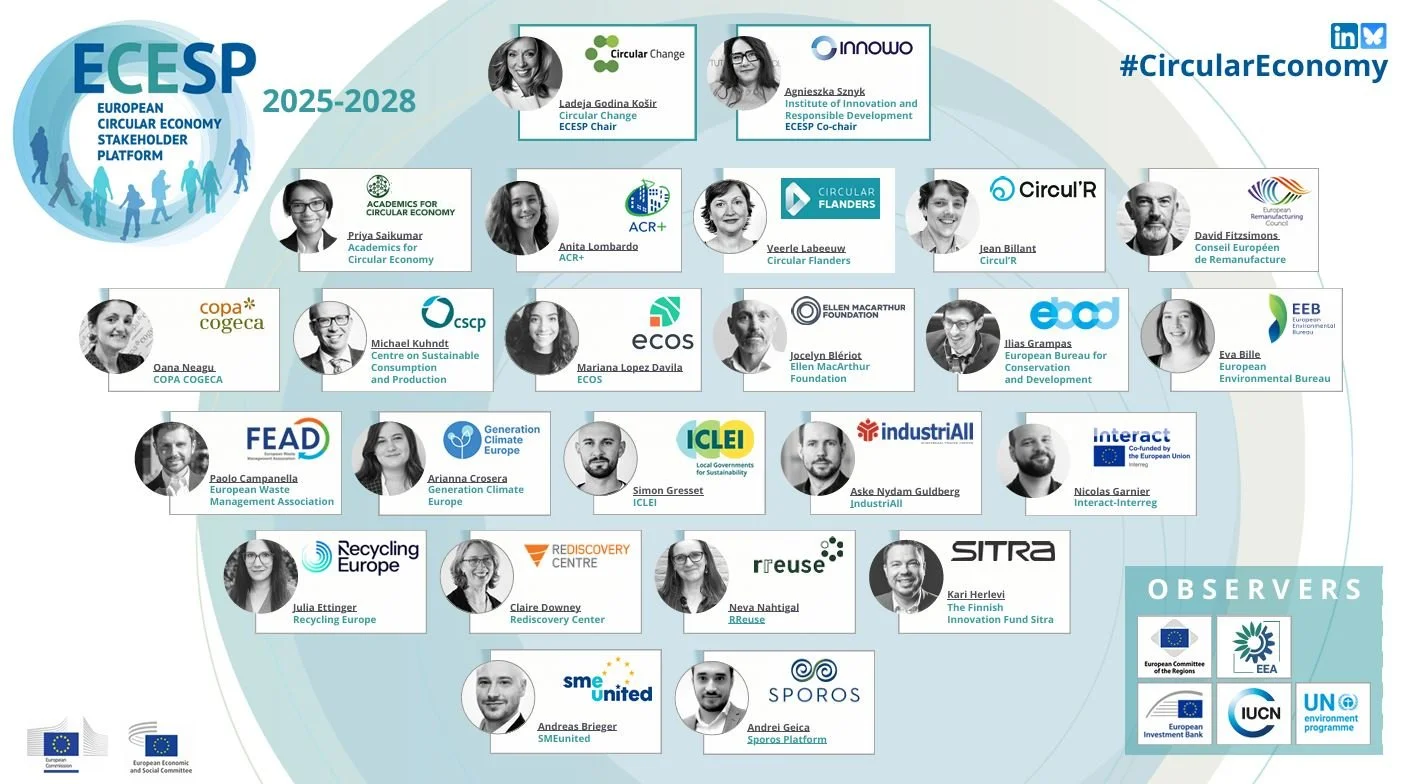
Circular Change’s founder and director, Ladeja Godina Košir, serving as Chair of the European Circular Economy Stakeholder Platform (ECESP), played a key role in advancing this agenda in Europe and beyond. Through ECESP — one of the EU’s most influential platforms for circular policy exchange — she continued to strengthen connections between policymakers, industry, cities, and civil society, helping amplify Europe’s voice in global conversations on system transformation.
Osaka — Circular Diplomacy at Expo 2025
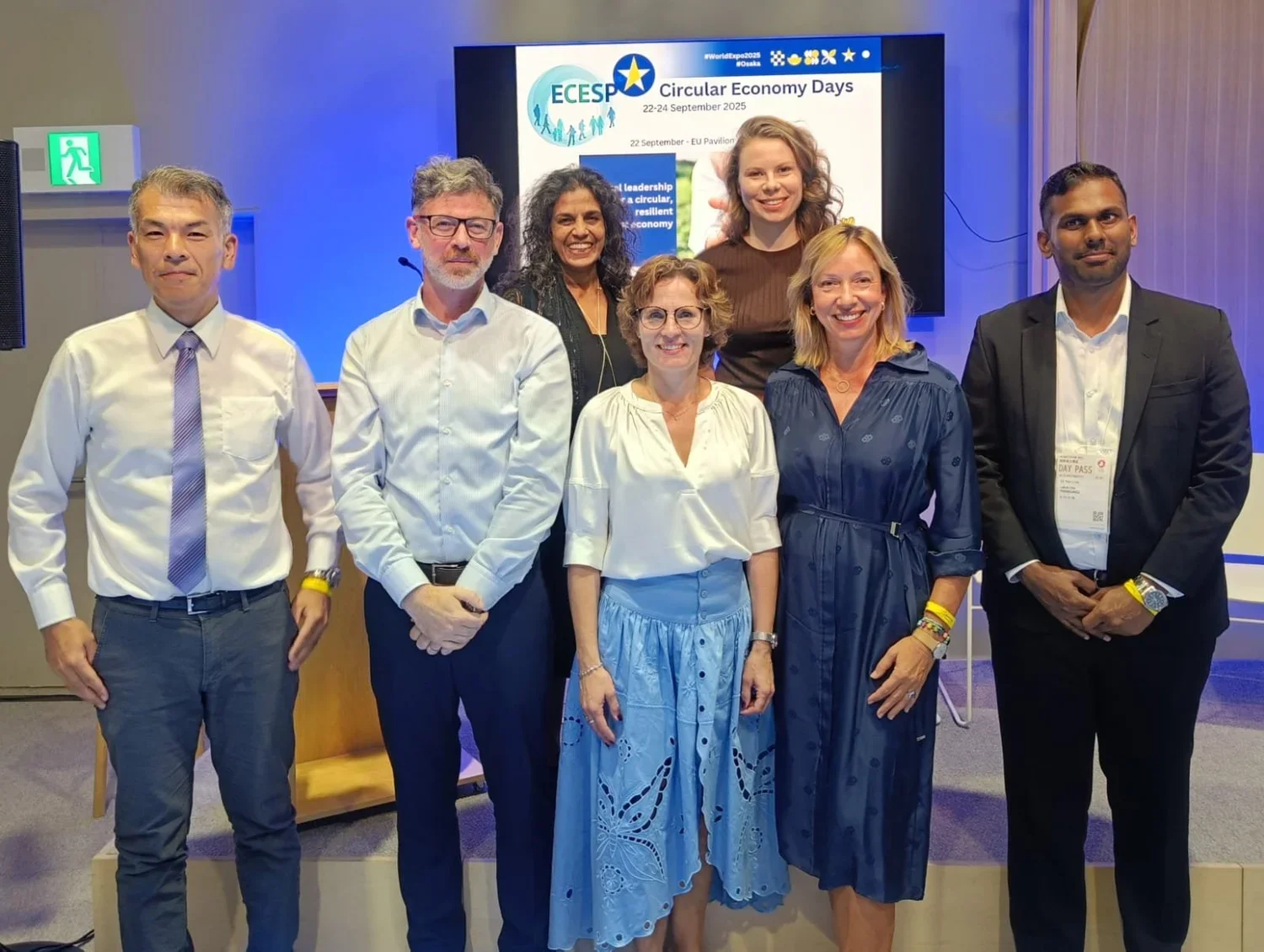
At Expo 2025 Osaka, Ladeja Godina Košir curated and led the flagship panel on Circular Diplomacy, bringing together international policymakers, business leaders, UN representatives and civil society.
The discussion challenged traditional diplomatic thinking, highlighting how circular economy principles can support cooperation, resilience and shared prosperity. Jessika Roswall, European Commissioner for Environment, emphasised the importance of values-based circular approaches in strengthening multilateral collaboration and translating global ambition into action.
By convening diverse global voices in Osaka, Ladeja Godina Košir helped advance circular diplomacy as an approach to navigating complexity and supporting more resilient, inclusive futures.
Why this matters
Because circular diplomacy starts wherever people choose cooperation over silos, listening over positions, and long-term wellbeing over short-term gain.
Brazil — Strengthening Global South–North Connections
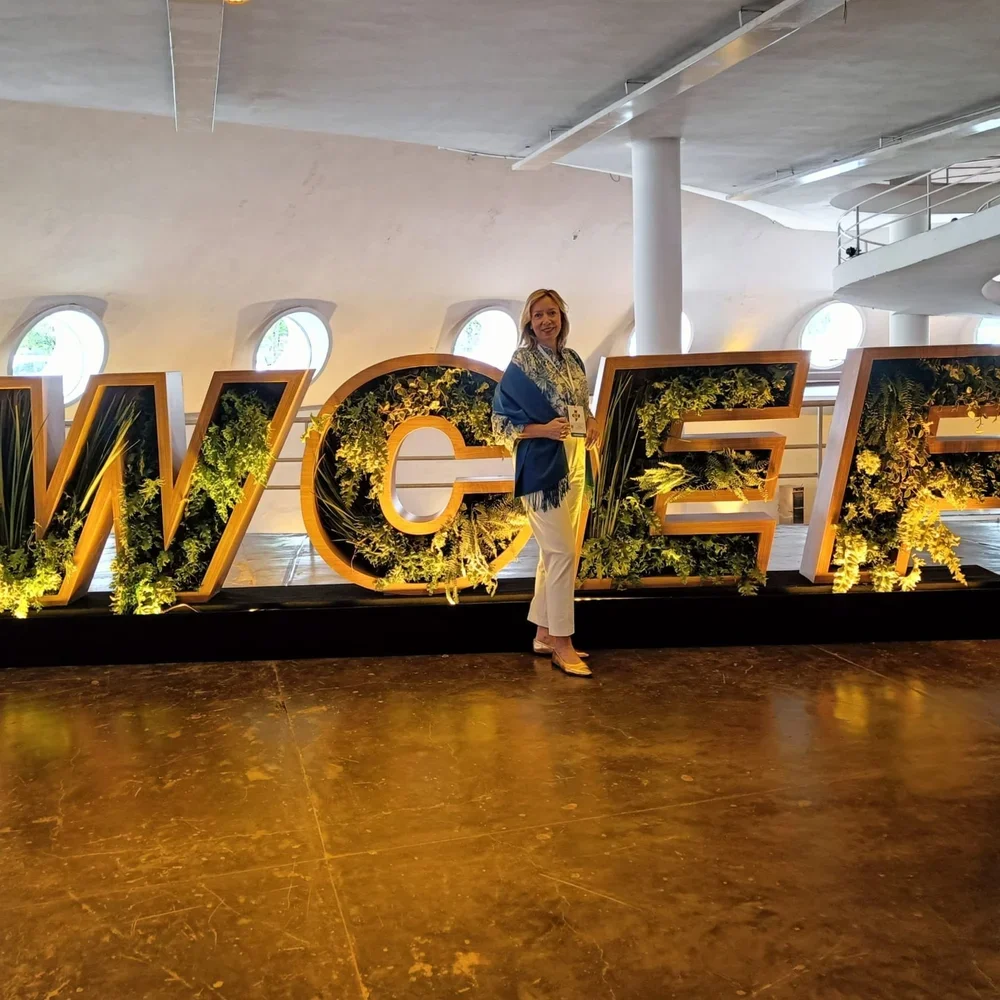
Circular Change continued its long-standing collaboration with Brazil’s circular economy ecosystem, highlighting the importance of transition brokers in connecting regions with different development contexts, biodiversity resources and industrial capacities.
Through Exchange4Change Brazil, Circular Change has worked for over ten years with Beatriz Luz and the Instituto Brasileiro de Economia Circular (IBEC), supporting knowledge exchange between the Global South and North. In 2025, Brazil’s growing circular momentum — including IBEC’s contribution on circular diplomacy in the context of COP — made this dialogue especially relevant, reinforcing the circular economy as common ground for international cooperation and climate action.
Why this matters
Because real change happens when people connect different realities, learn from each other and work across borders.
Paris — European Debates on the Future of Cities
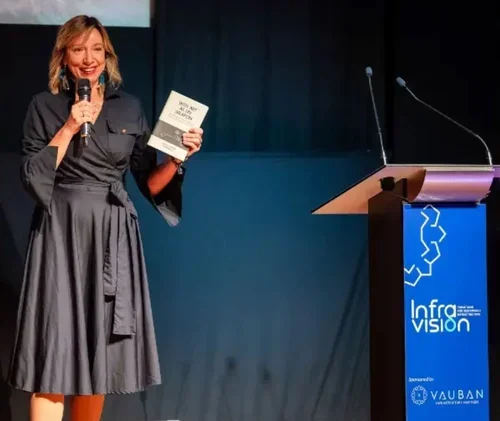
In Paris, Ladeja Godina Košir took part as a keynote speaker at the Cities of Tomorrow: Reimagining Urban Infrastructure conference, hosted by InfraVision, one of Europe’s leading think tanks on infrastructure and urban transformation. The debates focused on the future of cities — resilience, circular infrastructure, strategic autonomy and quality of life in an increasingly complex world.
In her keynote, Ladeja highlighted transition brokers as the missing link in urban transformation: professionals able to connect policy, infrastructure, business and communities, and turn long-term urban visions into coordinated action. Rather than positioning itself as the transition broker, Circular Change contributed to the debate as a platform advocating for the development of many more such roles across Europe and globally, echoing InfraVision’s research on long-term urban transitions.
Why this matters
Because transition brokers help cities move from plans to action — by connecting policy, infrastructure, business and communities in real, coordinated ways.
FROM PROJECTS TO IMPACT
GPP2ADRION — Circular Public Procurement
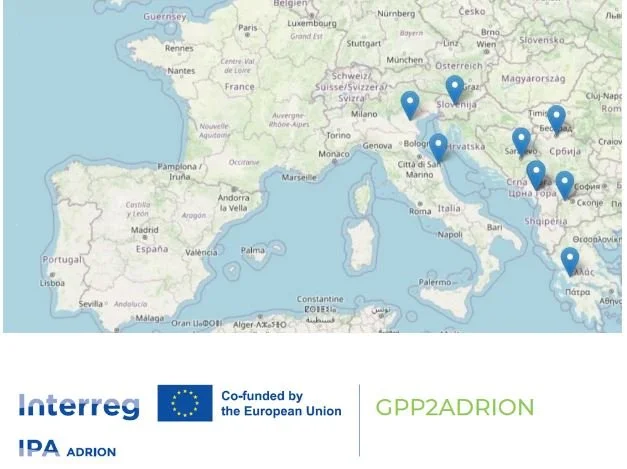
In GPP2ADRION, Circular Change led the development of shared approaches to circular public procurement across the Adriatic–Ionian region. The project shows how public procurement, supported by capable transition brokers, can influence markets and accelerate the uptake of circular solutions.
BOOST4BIOEAST — Bioeconomy as a Connector
As Slovenia’s national coordinator for BOOST4BIOEAST, Circular Change worked to link bioeconomy and circularity at national and EU level. Together with SI.Bio, Slovenia’s national bioeconomy hub, the project shows how coordinated, multi-country platforms can connect policy, research and business — when trust and facilitation are in place.
Local & Regional Ecosystems —JUST TRANSITION in Practice
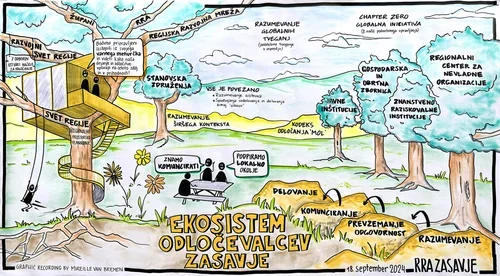
Alongside EU projects, Circular Change focused on local and regional ecosystems. Work in Zasavje showed how the circular economy can support a just transition in regions facing structural change. Through the Circular Economy Academy Zasavje, Circular Change helped bring together municipalities, companies, institutions and communities around practical circular solutions that build skills, resilience and new opportunities.
CIRCULAR CHANGE AS A KEY EUROPEAN ACTOR
In 2025, Circular Change further consolidated its position as a relevant European actor in the circular transition, active at the intersection of policy, practice and knowledge creation. Members of the Circular Change team contributed as authors to two international books on sustainability and circular economy — one published in December 2025 and another to be released in January 2026— reinforcing the organisation’s role in shaping thought leadership alongside action.
A major milestone was the appointment of Ladeja Godina Košir as Chair of the European Circular Economy Stakeholder Platform (ECESP) for the 2025–2028 mandate. In this role, she leads one of the EU’s key multi-stakeholder platforms, connecting European institutions, industry, cities and civil society around the circular economy agenda.
10 YEARS OF CIRCULAR CHANGE
In 2026, Circular Change will mark a decade of work dedicated to advancing the circular economy and systemic transformation across regions and sectors.
The anniversary year will begin internationally. In January 2026, Ladeja Godina Košir will bring European perspectives on circular transformation to Australia, taking part as a speaker at a circular economy-focused event for 2026 and opening new opportunities for global exchange and cooperation.
[More on the events marking the 10th anniversary: coming soon]
WITH GRATITUDE
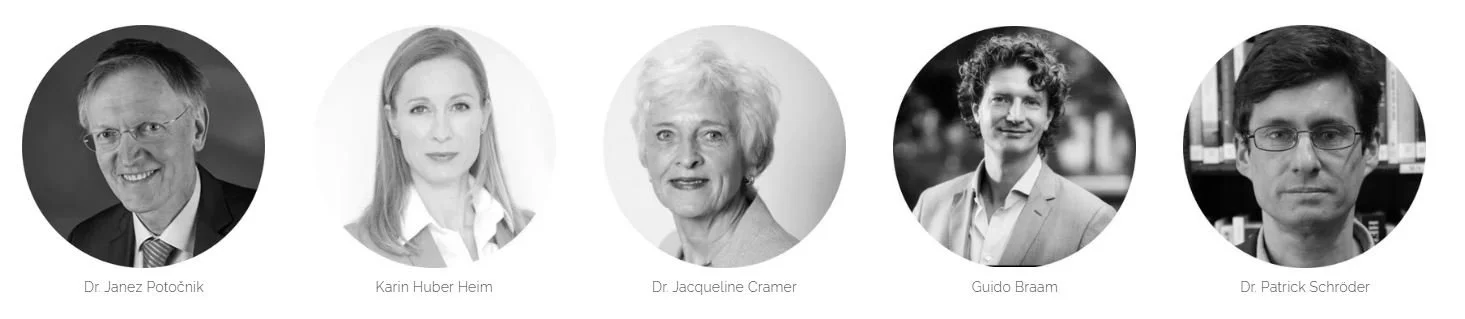
THANK YOU to everyone who collaborated with us and contributed to Circular Change’s work in 2025. and heartfelt thanks to our Honorary Council for their trust, guidance and continued support: Dr. Janez Potočnik, Karin Huber Heim, Dr. Jacqueline Cramer, Guido Braam, and Dr. Patrick Schröder.